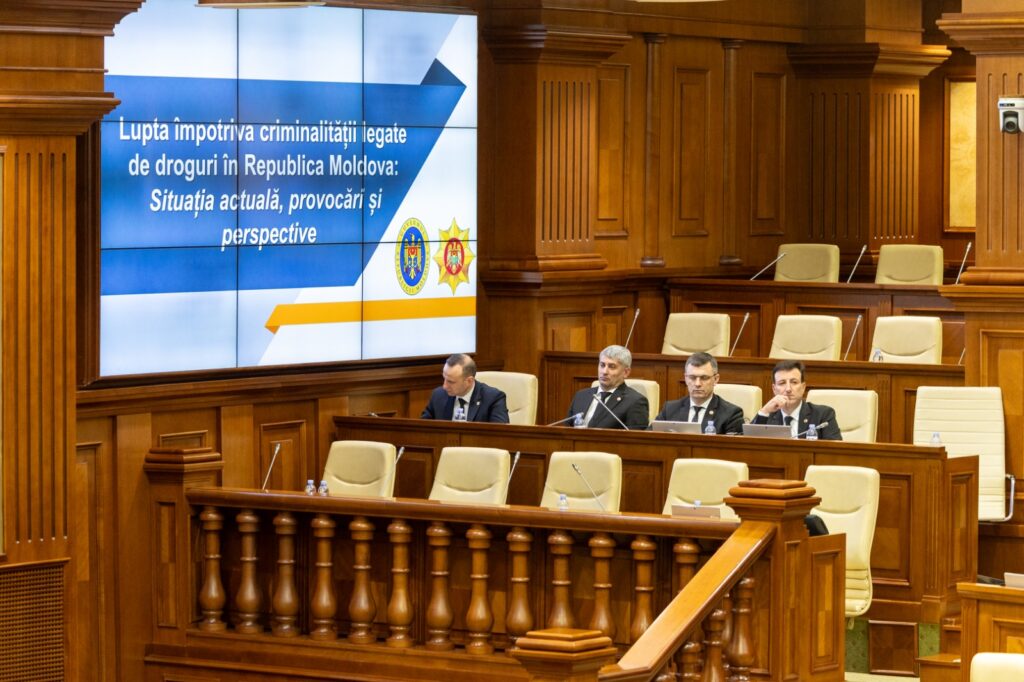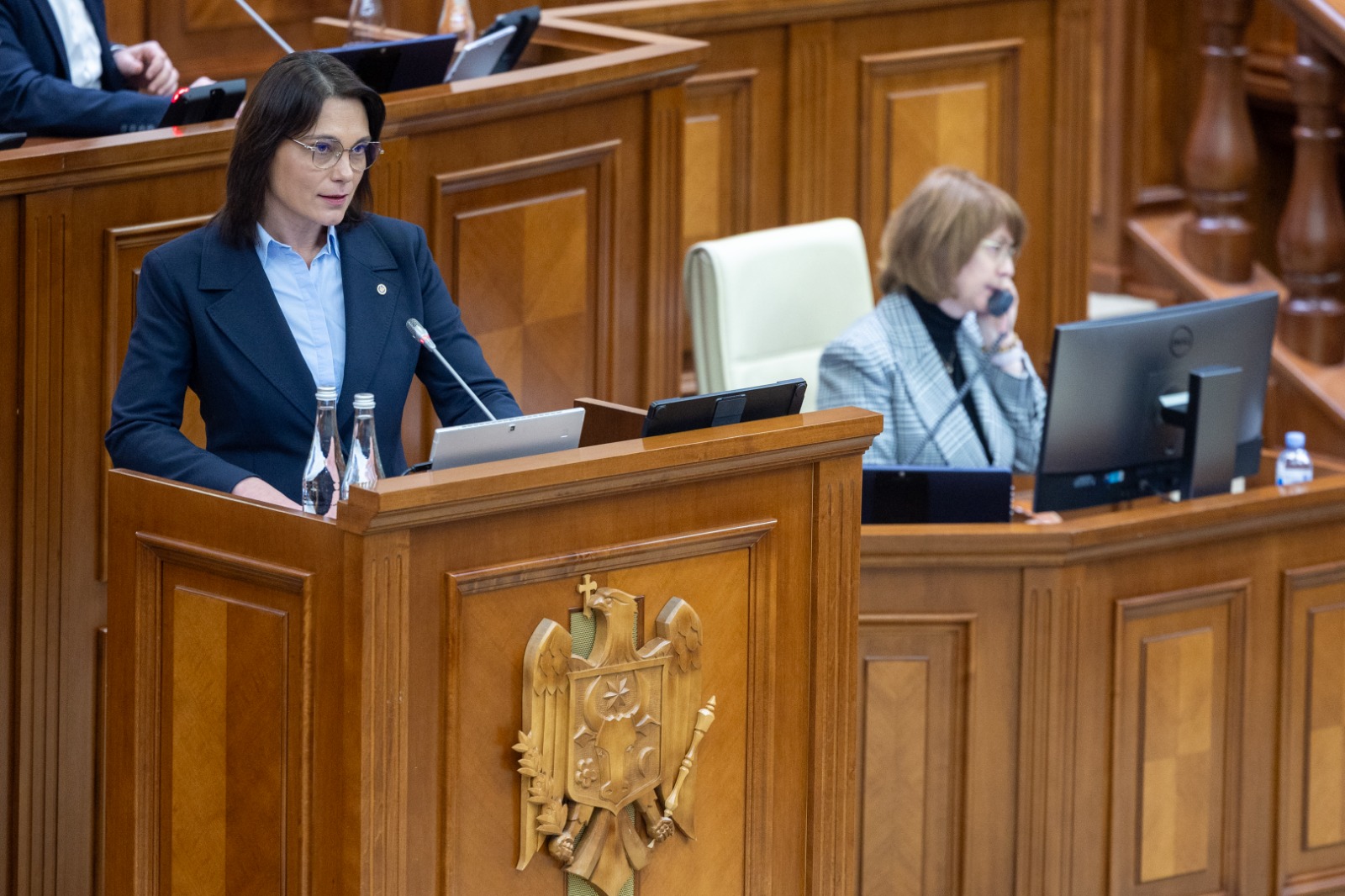
The Minister of Internal Affairs, Daniella Misail Nichitin, together with her team, presented a comprehensive report on the drug phenomenon in Moldova during parliamentary hearings. The discussion took place against the backdrop of international and regional trends marked by rising consumption and the diversification of illicit drug markets. The presentation also highlighted recent operational results, and outlined strategic priorities for strengthening the institutional response.
The assessment provided an in-depth overview of the current situation, existing mechanisms, and areas requiring further improvement. It emphasized the need for a coordinated, proactive, and sustained response from all state institutions, in partnership with civil society and citizens. The Ministry of Internal Affairs welcomed the Parliament’s openness to cooperation and swift action aimed at enhancing the state’s resilience in addressing the drug phenomenon.
Illegal drug trafficking and consumption pose a direct threat to public order and security, public health, and the protection of children, young people, and vulnerable groups. International trends point to a steady increase in consumption and the growing sophistication of illicit markets, including the use of digital technologies and encrypted networks – developments that are also affecting Moldova.
The country’s geographical position, significant flows of people and goods, and the adaptability of criminal networks require a firm and coordinated institutional response. The Ministry of Internal Affairs promotes an integrated approach that combines supply reduction through law enforcement, demand reduction through prevention and education, treatment and rehabilitation services, as well as strengthened inter-institutional and international cooperation.
Operational results
Between 2023 and January 2026, a total of 3,575 drug-related crimes and 16,642 misdemeanours were recorded nationwide. Trends observed in 2025 and early 2026 indicate an increase in criminal cases, largely driven by intensified police efforts and mounting pressure from synthetic drugs on the domestic market.
In 2025, 775 individuals were identified as being involved in drug-related crimes, including 36 minors, and 737 cases were referred to court. In the first month of 2026, 34 adults and one minor were documented, with most cases subsequently forwarded for judicial examination.
Criminal profiling indicates that the majority of offences are committed by individuals aged 18 – 24 and over 30, with men accounting for the largest share. The involvement of minors, including in drug distribution via digital platforms, remains a major concern and a priority area for intervention.
In the smuggling segment, 50 cases of illicit drug trafficking were documented in 2025, representing an increase of approximately 28% compared to the previous year.
Seizure data reveal a mixed market structure. Herbal drugs such as marijuana and hashish remain present, while the synthetic drug segment has expanded significantly. In 2025, the quantities of PVP, mephedrone, amphetamine, and MDMA increased substantially compared to the 2022-2024 period. The emergence of new psychoactive substances underscores the need for continuous updates to the list of controlled substances and further strengthening of forensic and expert capacities.
How criminal networks operate
Investigations have revealed the increasingly sophisticated methods used by traffickers, including:
– encrypted applications and online platforms for coordination and marketing;
– the “pre-arranged hiding places” method for distribution;
-cryptocurrencies for financial transactions;
-passenger road transport and postal parcels for smuggling drugs into the country.
Authorities have also documented call center-type mechanisms used to recruit couriers, as well as the involvement of transnational networks that traffic drugs from European Union countries and Ukraine.
Interventions and international cooperation
Between November 2025 and Februarie 2026, several significant cases were documented, including the dismantling of online drug stores, the seizure of substantial quantities of PVP, mephedrone, MDMA, and hashish, and the arrest and prosecution of members of organized criminal groups.
The transnational operation ICE AGE resulted in the dismantling of several clandestine laboratories, the seizure of large quantities of drugs and goods valued at approximately 42 million MDL, and the arrest of 16 individuals.
In 2025, cooperation agreements were concluded with Ukraine and joint investigation teams were established. Through coordinated inter-institutional actions, 169 searches were carried out within 270 criminal cases, removing drugs worth over 56 million MDL from circulation.
Prevention and community engagement
The fight against drugs includes a systematic prevention component.
In 2025, more than 3,000 outreach and awareness-raising activities were organized nationwide, reaching over 86,000 citizens.
Within the education sector, the police campaign “My health, my choice! Say NO to excess and prohibited substances” delivered approximately 1,000 activities in 771 educational institutions, engaging over 51,000 pupils and students.
Additionally, around 2,500 preventive raids were conducted and more than 1,700 educational institutions were visited as part of ongoing risk prevention efforts.
Strategic priorities
The National Anti-Drug Commission has identified the following priority areas for the upcoming period:
-developing and adopting the National Strategy on Drugs and Addictions 2026-2032;
-operationalization of the national early warning system for new psychoactive substances;
-strengthening the traceability of seized drugs and aligning procedures with European standards;
-establishment of mechanisms for monitoring unaccompanied parcels and amending the legal framework regarding sender identification data;
-intensification of cooperation with specialized European agencies;
-enhancing the technical and professional capacities of the personnel involved;
– continuing cross-border operations and dismantling criminal groups, including those operating in the online environment;
-implementation of an integrated national digital mechanism for recording children who use drugs;
– development of mechanisms for reporting cases of drug use and illicit trafficking within educational institutions;
– approval of a Joint Plan on the prevention of the use and distribution of prohibited substances in educational institutions;
– drafting a law on the prevention and combating of illegal drug trafficking, with a particular focus on the protection of minors;
– conducting a study on monitoring consumption trends through wastewater analysis.
The Ministry of Internal Affairs reiterates that illicit drug trafficking is a component of transnational organized crime and requires an integrated, firm, and sustained response.
The results achieved by the National Police and other competent authorities demonstrate the state’s strong commitment to combating the drug phenomenon and protecting citizens, particularly children and young people. The Ministry of Internal Affairs will continue to strengthen prevention and intervention mechanisms in close cooperation with Parliament and other state institutions.