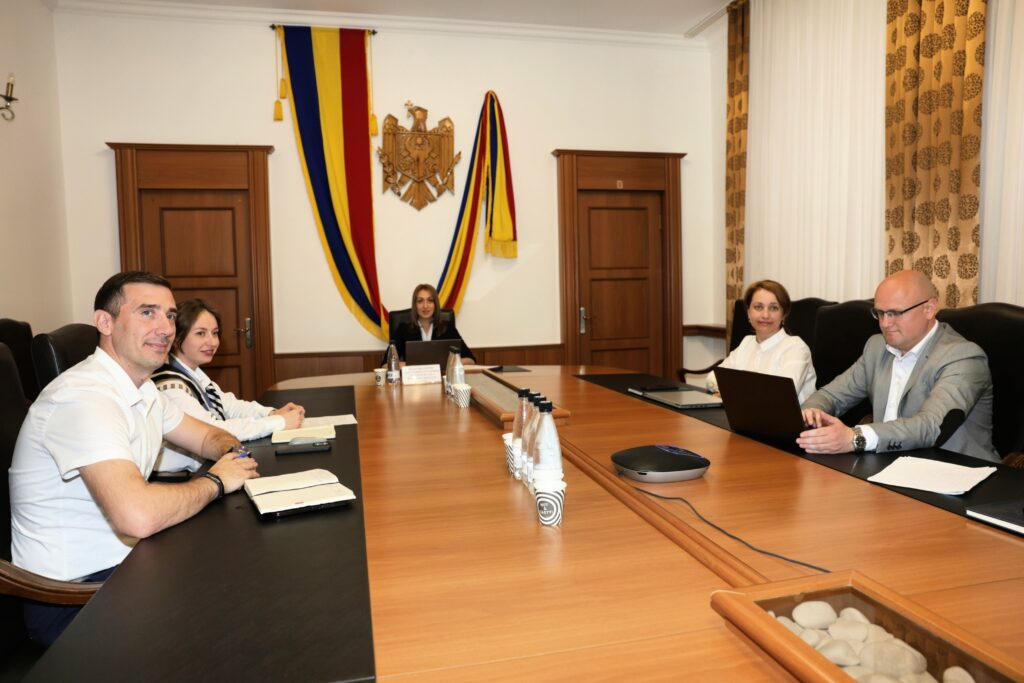
Members of the National Council for Integrated State Border Management convened for an extraordinary meeting, during which they approved the establishment of the Working Group on Quality Control.
During the meeting, the deputy chair of the Council and State Secretary at the Ministry of Internal Affairs, Diana Salcuțan, emphasized that the creation of the Working Group marks a concrete step forward in strengthening the national quality control mechanism, improving institutional coordination, and advancing Moldova’s preparations for the Schengen evaluation process.
The implementation of the national quality control mechanism will contribute to strengthening public safety and safeguarding fundamental rights, with a direct impact on people crossing the state border. Particular attention within the evaluation and monitoring process will be given to ensuring the appropriate treatment and protection of vulnerable groups at the border, including women, children, and victims of trafficking, in line with international best practices. The findings of these evaluations will support strategic decision-making and help guide funding priorities, ultimately contributing to improved public services and a better travel experience for citizens.
The National Council for Integrated State Border Management serves as an advisory body that facilitates communication and cooperation among the authorities involved in integrated border management, contributing to the security of the state border and the development of a modern and efficient management system.
As of Februarie 2026, the Council assumed strategic coordination of the National Quality Control Mechanism – an evaluation and monitoring instrument based on assessment missions carried out within national institutions. Its purpose is to identify deficiencies, vulnerabilities, and areas requiring improvement or investment, while supporting the enhancement of security services and Moldova’s preparation for European Union evaluations related to accession to the Schengen Area.
The establishment of the Working Group marks the first stage in implementing this mechanism. The Group will be responsible for organizing evaluation missions, coordinating preparations for Schengen evaluations, and monitoring the implementation of recommendations stemming from evaluation reports, thereby strengthening the coherence and effectiveness of the overall process.