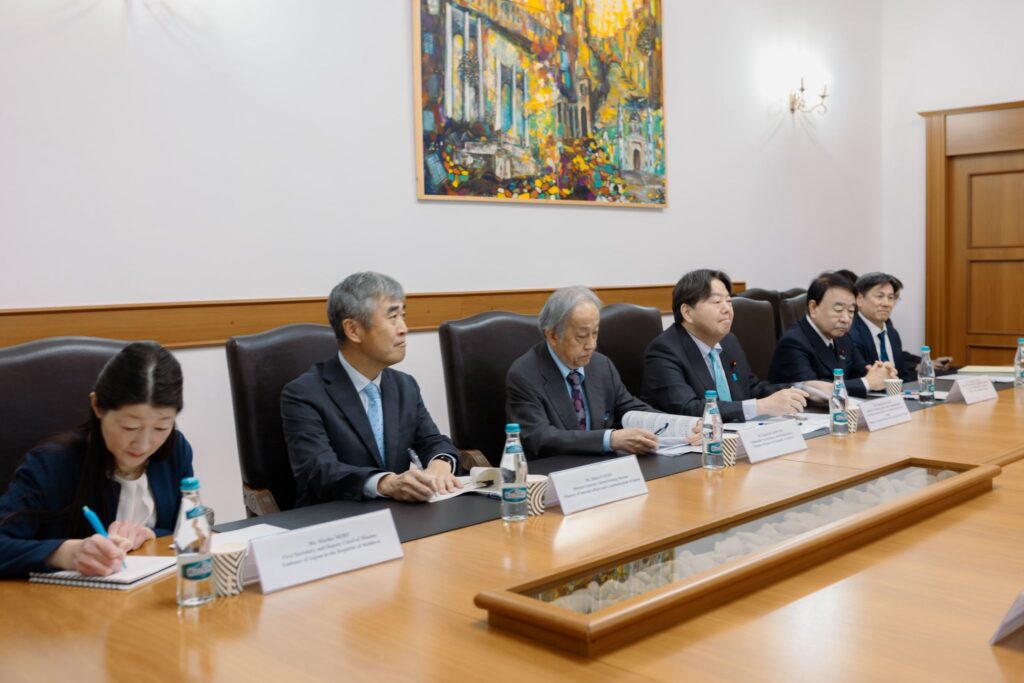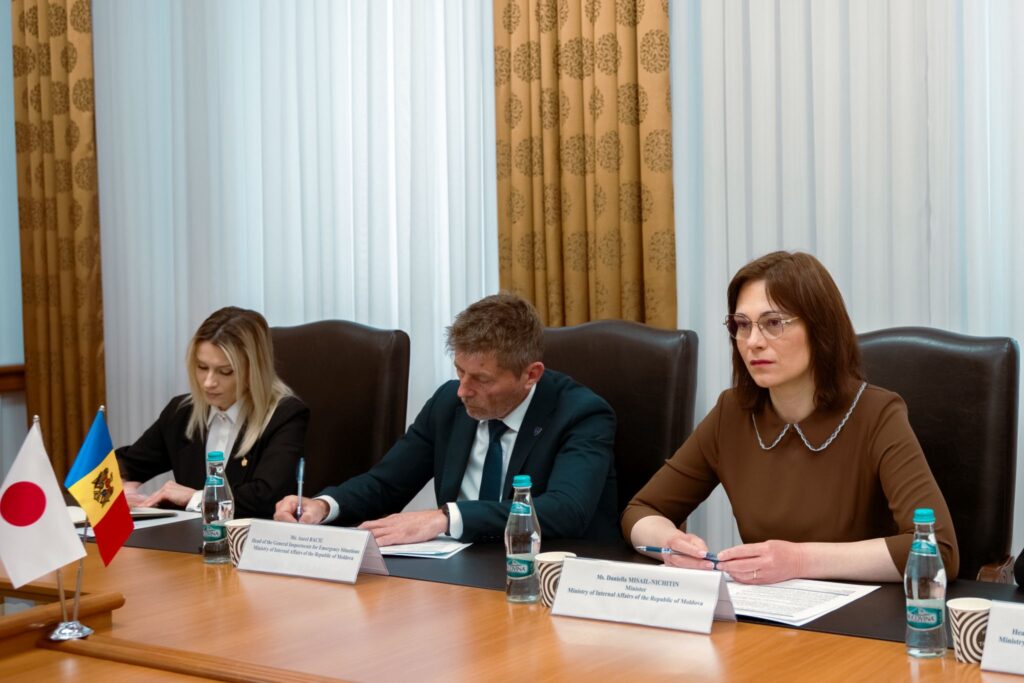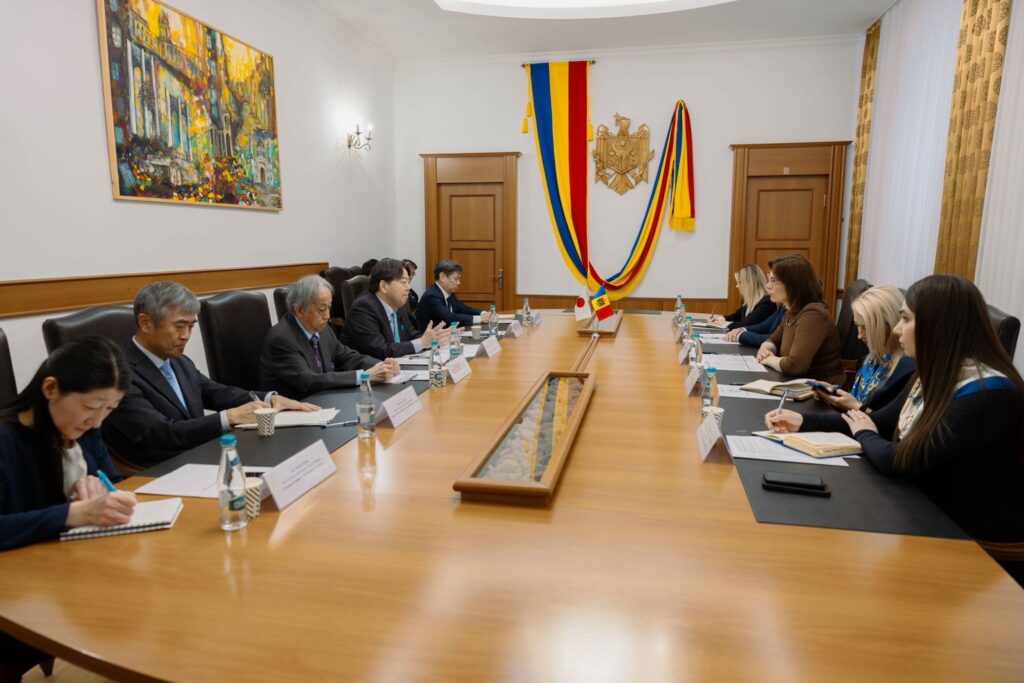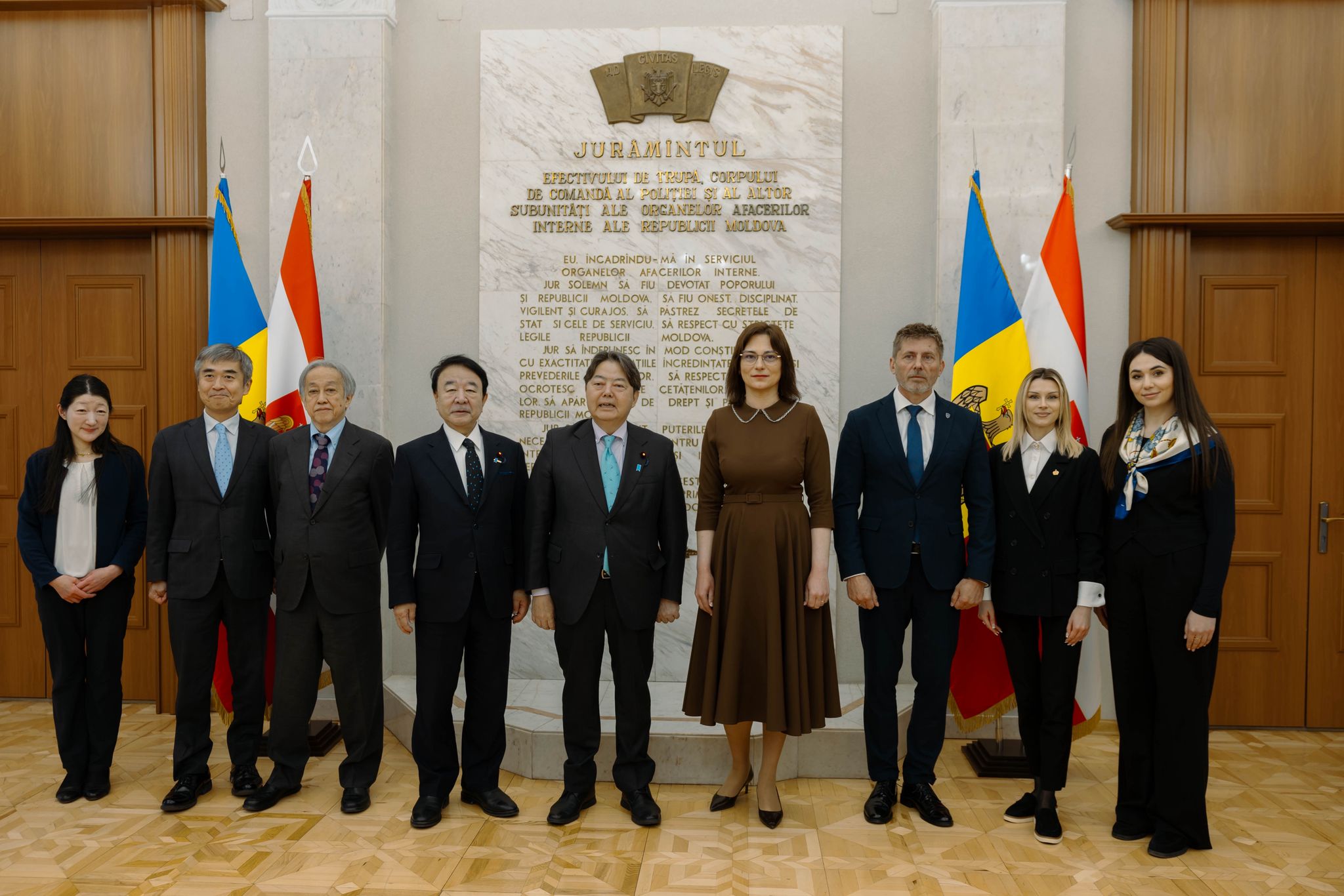
Today, the Ministry of Internal Affairs welcomed the visit of Japan’s Minister of Internal Affairs and Communications, Yoshimasa Hayashi.
Discussions with the Japanese delegation focused on advanced technologies and practical solutions that can enhance the speed, efficiency, and coordination of emergency response operations.
Citizens across the Republic of Moldova are already benefiting from the strong partnership with Japan. Through projects implemented with the support of the Japan International Cooperation Agency, the General Inspectorate for Emergency Situations has been equipped with modern firefighting equipment. Nineteen fire engines, distributed across ten operational units in six localities across the country, are already enabling faster responses and more effective interventions, including in high-rise buildings where access to upper floors presents operational challenges.
Japanese assistance has also strengthened the operational capacities of the Border Police through the provision of specialized equipment used in managing refugee flows, conducting operational interventions, and ensuring power supply in critical situations.
Moldovan – Japanese cooperation extends beyond equipment to include the exchange of expertise and best practices. Japanese coordination models, integrated emergency response systems, and digital solutions are currently being assessed for potential implementation in Moldova, with the objective of enabling real-time coordination of interventions through a unified command structure.
Japan’s technological expertise and experience in fire and disaster management will serve as a foundation for this process. In this context, the operational practices of the National Research Institute of Fire and Disaster, as well as the training programs of the College of Fire and Disaster Management, are being examined as potential models.
In the coming period, the General Inspectorate for Emergency Situations is expected to receive additional fire engines, ladder trucks, protective equipment, and other specialized resources, while personnel will participate in professional training programs focused on emergency response and disaster management.
Another priority area under discussion is support for strengthening border security capacities aimed at preventing and countering cross-border risks.
At the same time, opportunities are being explored to integrate digital transformation solutions used by Japanese companies in order to facilitate real-time operational coordination and rapid data exchange, as well as to expand the participation of Moldovan professionals in international training programs focused on prevention, response, and risk assessment.
The parties also exchanged views on the regional security environment, including the war in Ukraine, hybrid threats, and efforts to counter disinformation.
Beyond equipment and technical assistance, this partnership is ultimately about building safer communities, strengthening resilience, and ensuring better protection for every citizen in times of crisis.