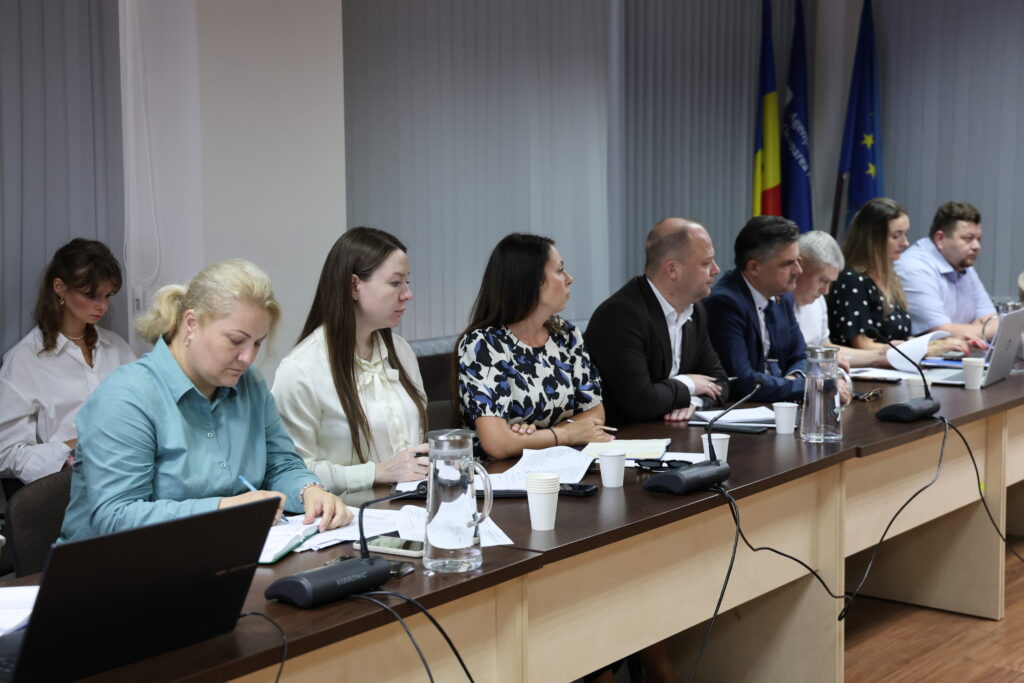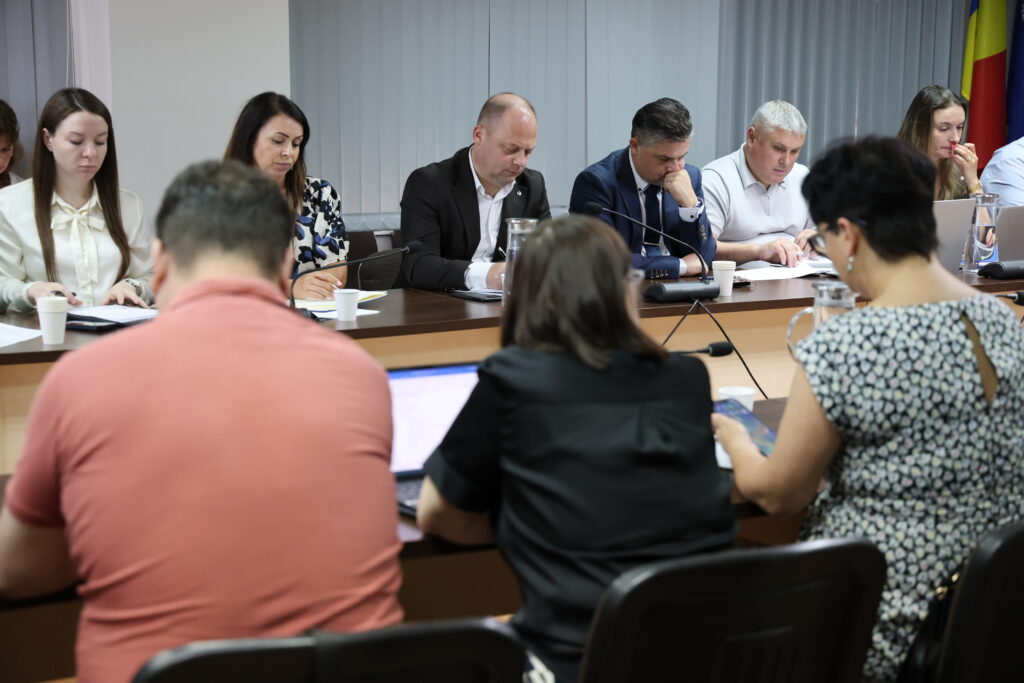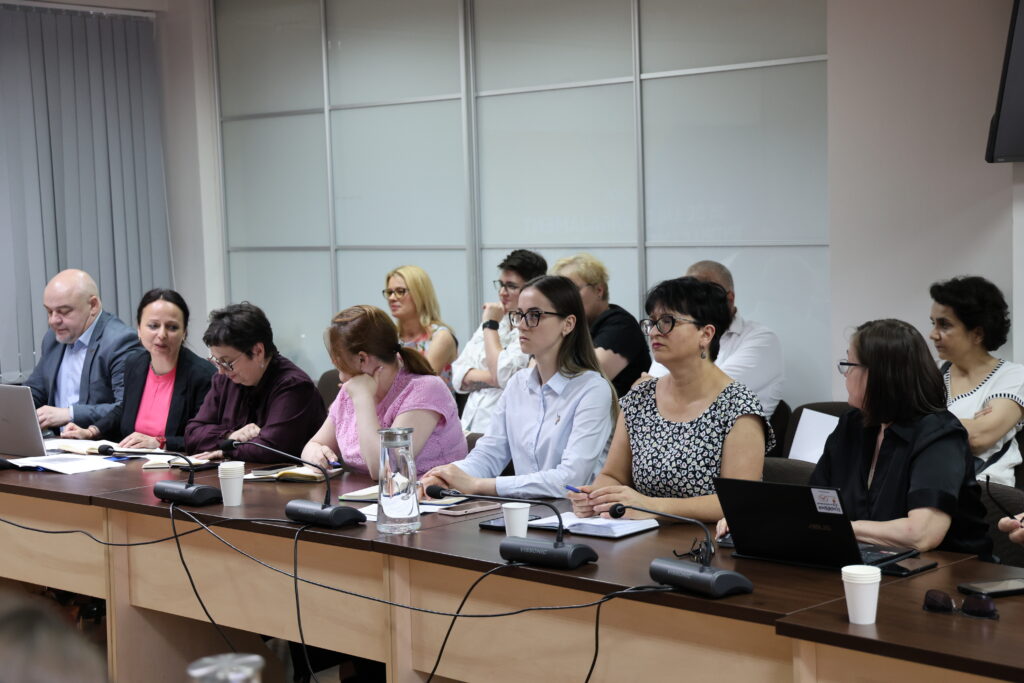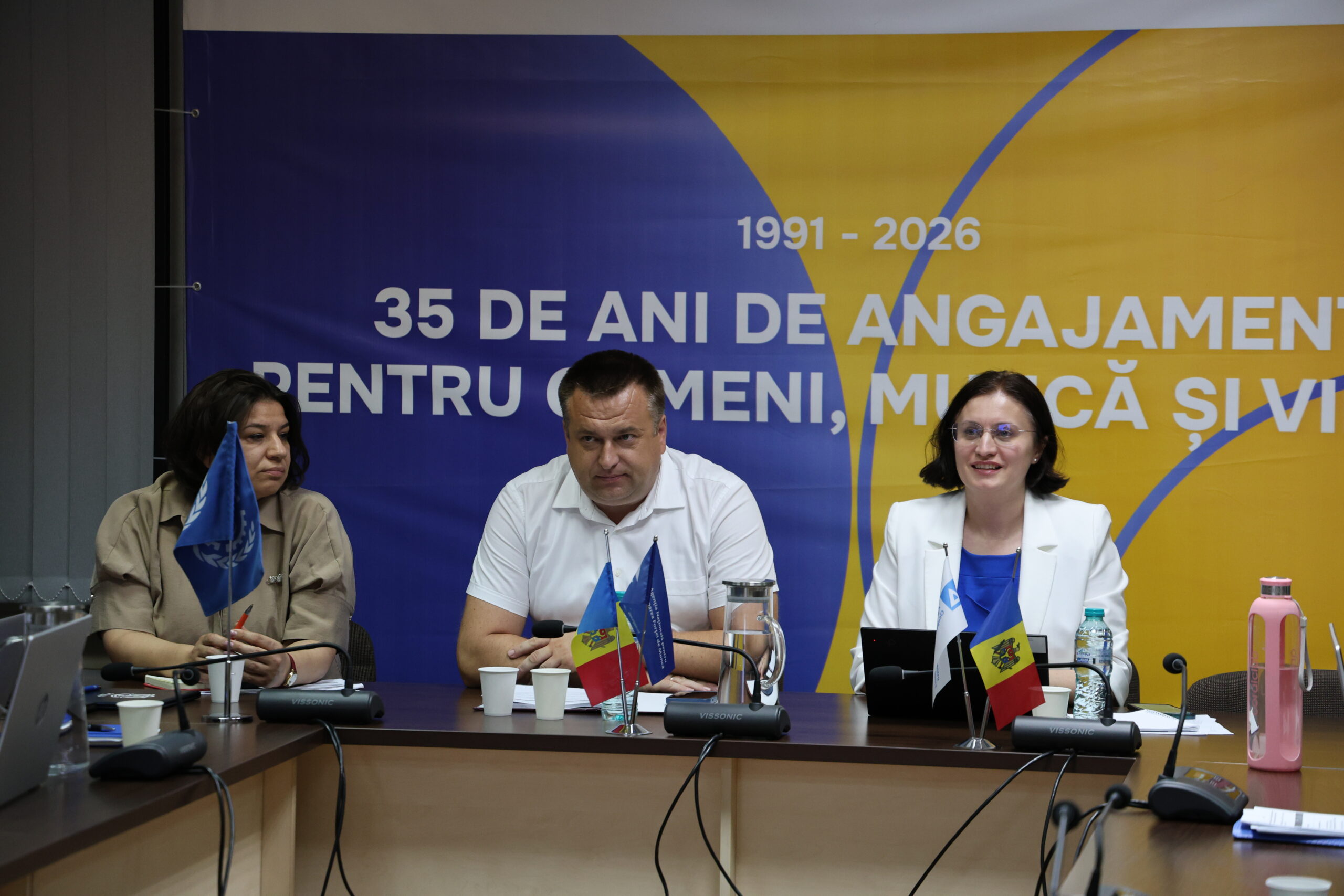
Preventing tragedies caused by domestic violence requires timely intervention, effective institutional cooperation, and a thorough understanding of the circumstances that place victims at risk. With this objective in mind, the Commission for Analysis of Femicide and Domestic Violence Cases Resulting in Death or Serious Bodily Injury of Victims convened for a working meeting.
Hosted by the Ministry of Labour and Social Protection, the meeting was chaired by Alexandru Bejan, State Secretary of the Ministry of Internal Affairs and Chair of the Commission. Participants included the Commission’s deputy chairs, Felicia Bechtoldt, State Secretary at the Ministry of Labour and Social Protection, and Neli Lelenco, Deputy Director General of the National Agency for the Prevention and Combating of Violence against Women and Domestic Violence. Laura Albu from Romania, a member of the Group of Experts on Action against Violence against Women and Domestic Violence (GREVIO), also participated in the discussions.
The meeting focused on current challenges in preventing and combating violence against women, with particular emphasis on strengthening victim protection mechanisms, improving interinstitutional coordination, and reducing the risk of femicide.
Participants also examined the draft Case Analysis Form for Femicide and Domestic Violence Resulting in Death or Serious Bodily Injury or Harm to Health. The proposed tool is intended to support a comprehensive assessment of risk factors, patterns of abuse, institutional responses, and gaps in intervention, thereby informing more effective prevention measures.
The Commission further underscored the importance of implementing the recommendations set out in its 2025 Activity Report. To support this process, an Action Plan for 2026–2027 will be adopted, outlining priority actions, institutional responsibilities, and concrete measures to strengthen the implementation of the Commission’s recommendations.
Through these efforts, the authorities seek to strengthen institutional capacities to prevent femicide and other severe forms of domestic violence while ensuring that victims receive timely protection and effective support.
Established in 2022, the Commission is an independent interinstitutional mechanism responsible for reviewing the most serious cases of domestic violence. By identifying systemic risk factors and institutional shortcomings, it formulates recommendations aimed at improving prevention, protection, and the overall response to domestic violence.