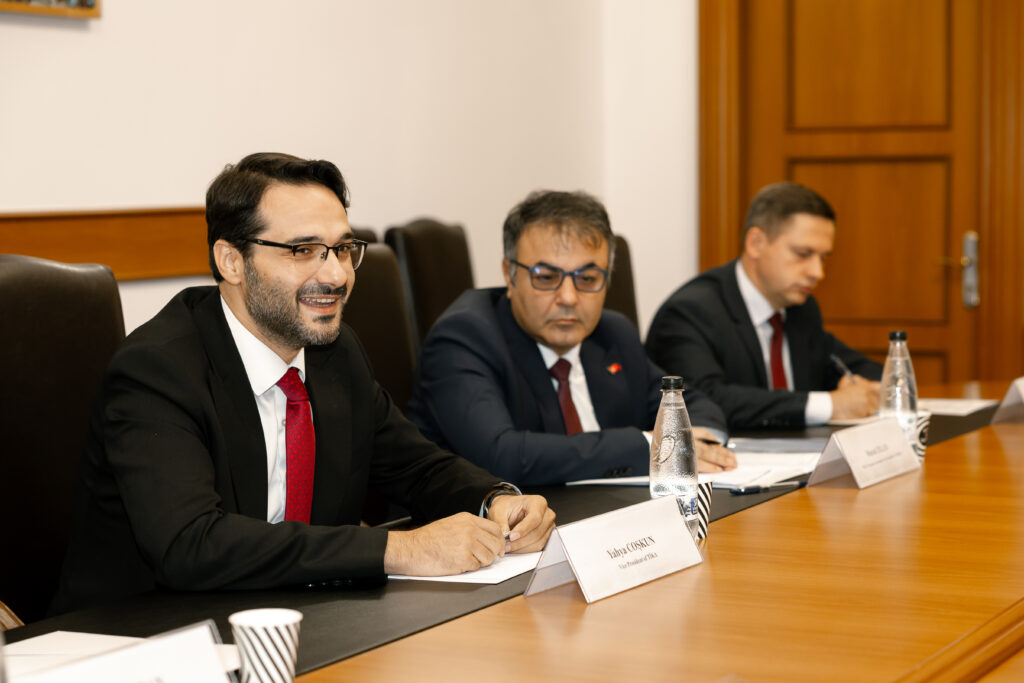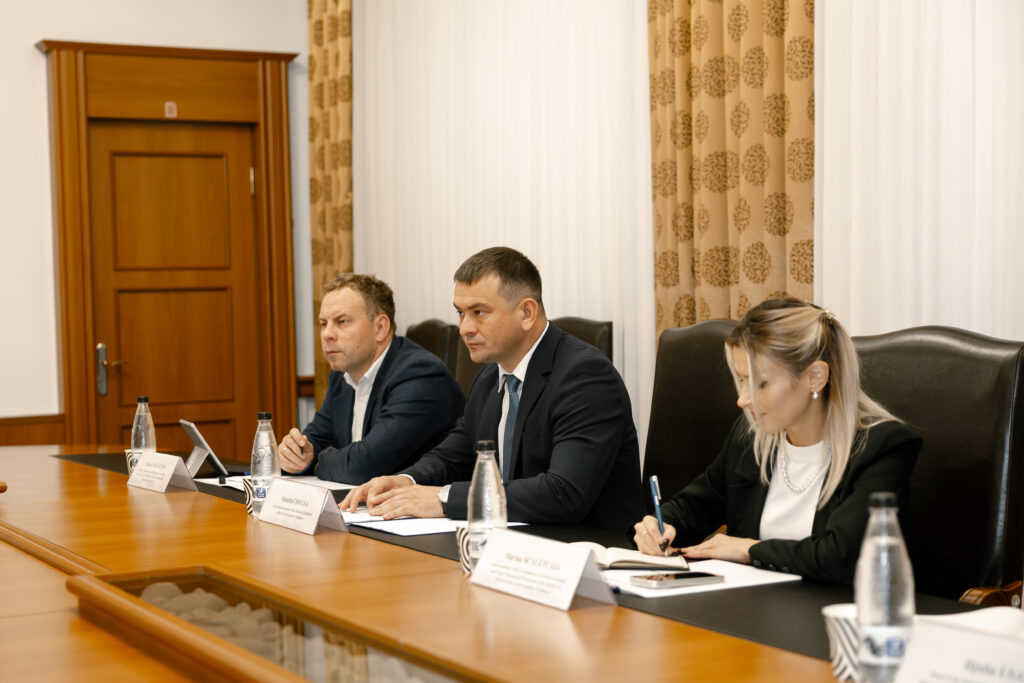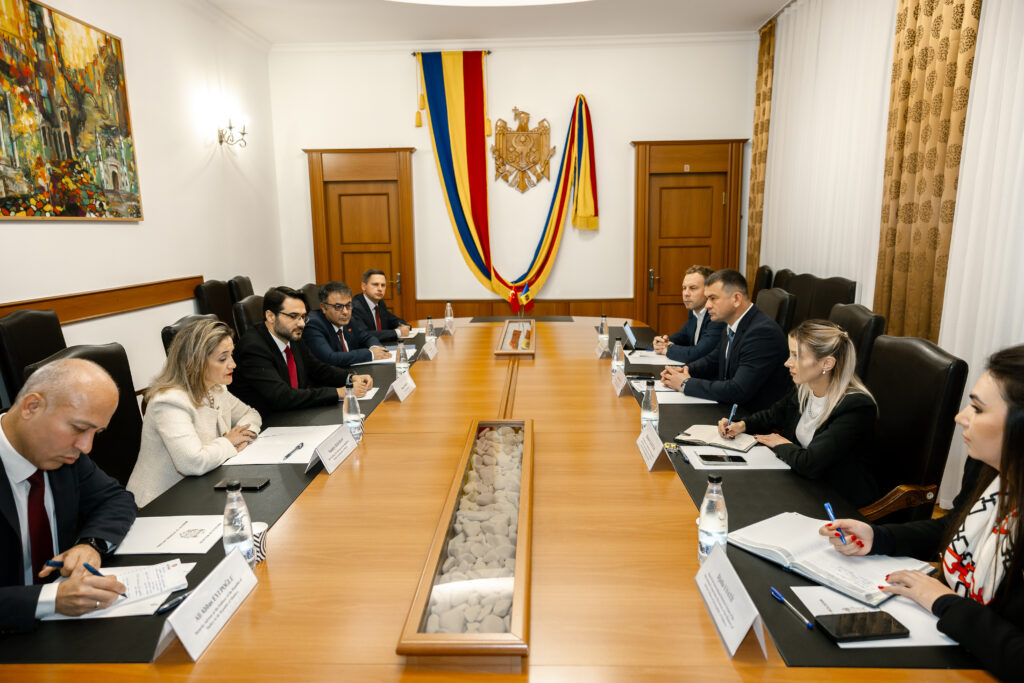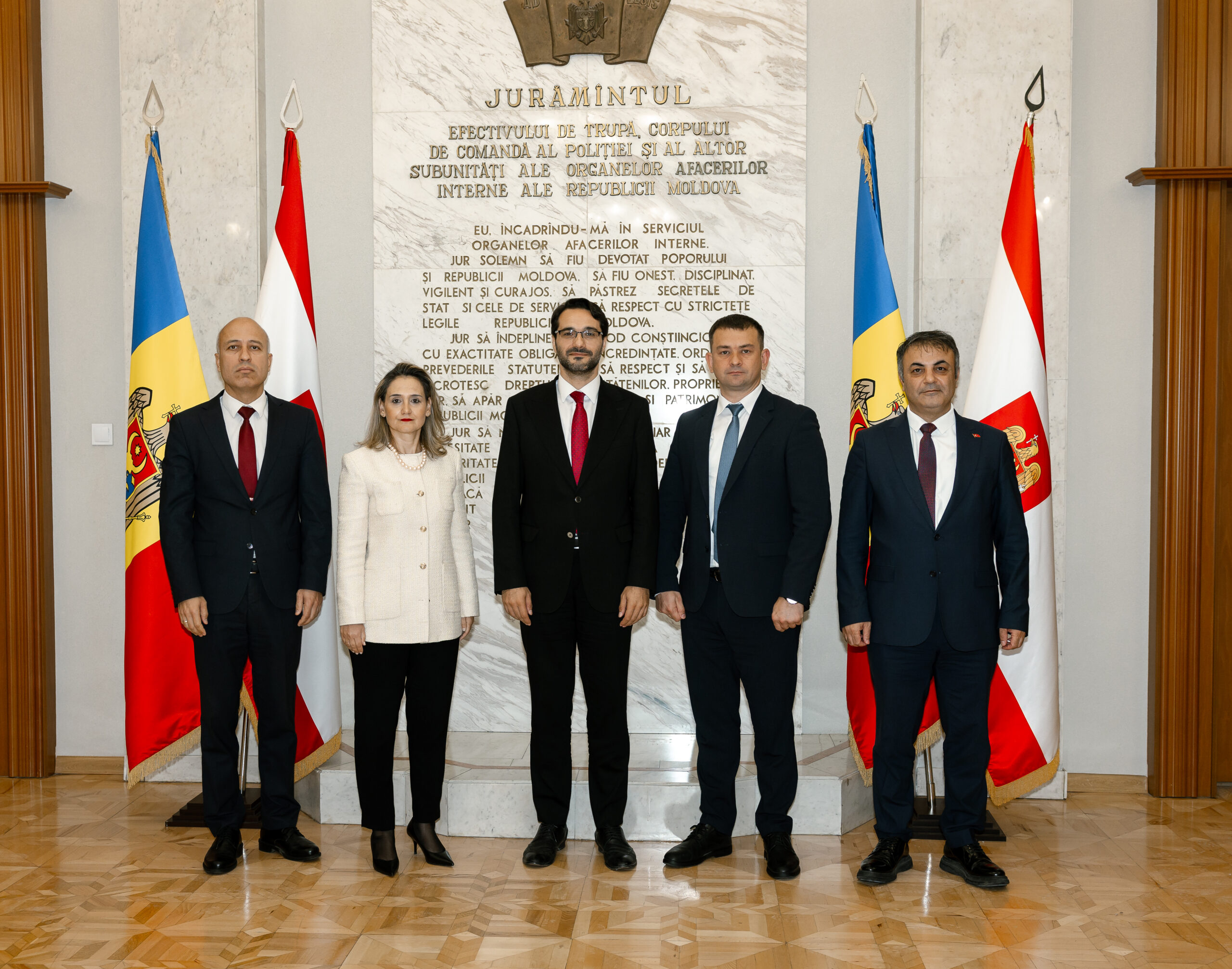
Behind every successful operation are people who are well-trained, properly equipped and ready to respond when needed. Staff training and improved working conditions were among the key topics discussed at a meeting between Valentin Cioclea, Secretary-General of the Ministry of Internal Affairs, Yahya Coșkun, Vice-President of the Turkish Cooperation and Coordination Agency (TİKA), and Nazmiye Başaran, Ambassador of the Republic of Turkey to the Republic of Moldova.
One area of discussion was the development of the professional skills of internal affairs staff to address current security challenges. The parties explored opportunities for training, exchanging experience and sharing best practices to strengthen staff capacity to respond to situations that threaten public safety.
Strengthening forensic capabilities was another priority discussed. The cooperation protocol recently signed with the Turkish side provides a framework for training and exchanging expertise with the Forensic Expertise Department of the Gendarmerie in Ankara, including through courses held in both countries. Topics include 3D scanning and crime scene reconstruction, facial recognition, the use of artificial intelligence in investigations, and the analysis of audio and video recordings. Applying these methods will help improve crime scene documentation, strengthening the accuracy of forensic examinations and support the identification of perpetrators.
The meeting also addressed exploring possibilities for renovating a building belonging to the General Inspectorate of the Carabinieri to meet the operational needs of the ‘Scorpion’ Special Destination Battalion.
In light of the security risks facing the region and the ongoing war in Ukraine, the parties also discussed ways to improve protection of border police officers operating along the Moldovan-Ukrainian border and identify support measures for personnel exposed to risks in the field.
Cooperation between the Ministry of Internal Affairs and TİKA offers an opportunity to draw on the experience and expertise of Turkish partners in areas that are essential to the Ministry’s work. The parties will continue to identify solutions tailored to the needs of the Ministry’s structures, ensuring that this partnership tangible benefits in staff training, working conditions and institutional capacity to respond to emerging challenges.