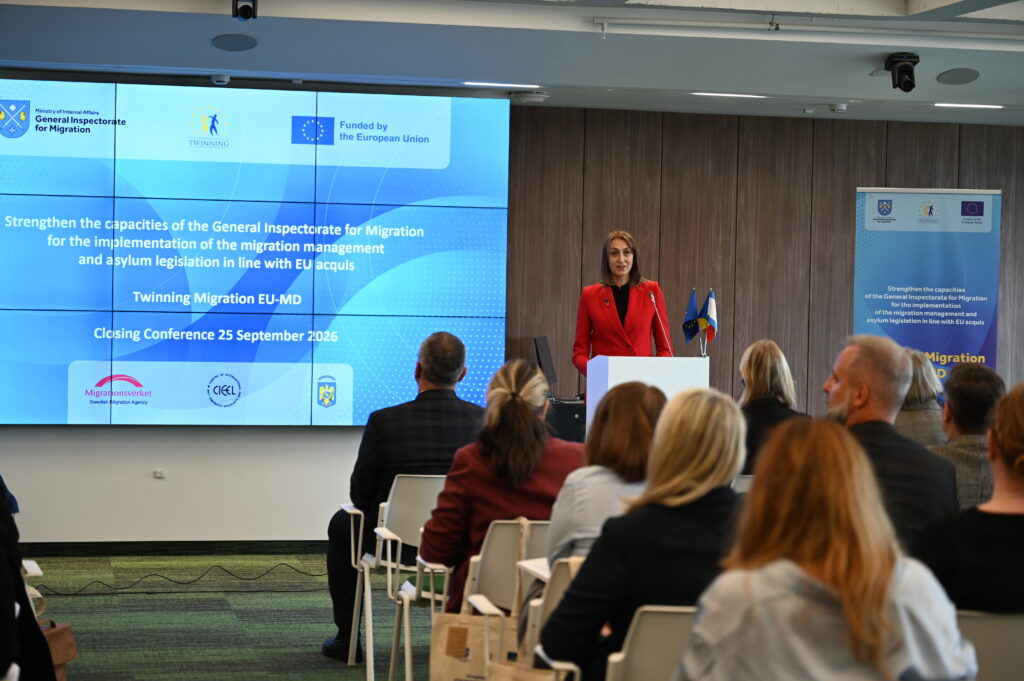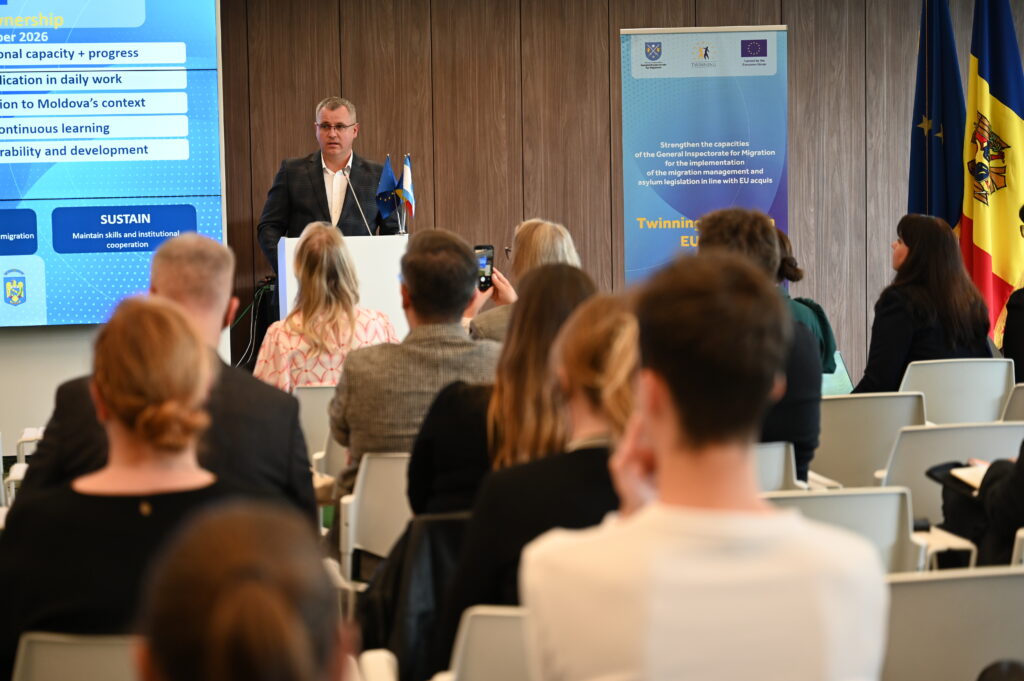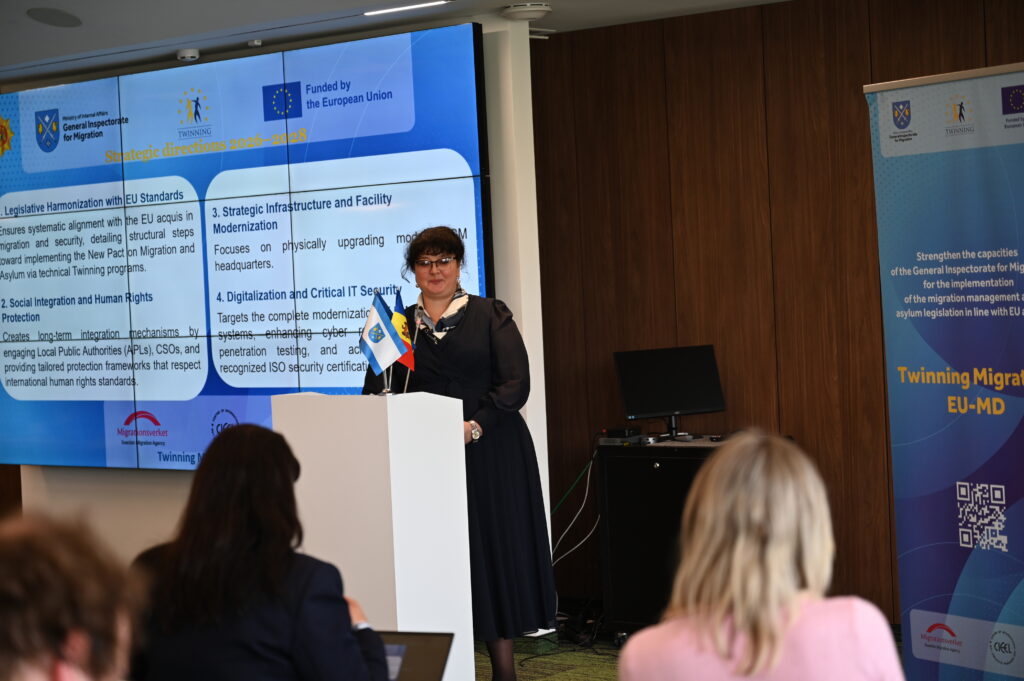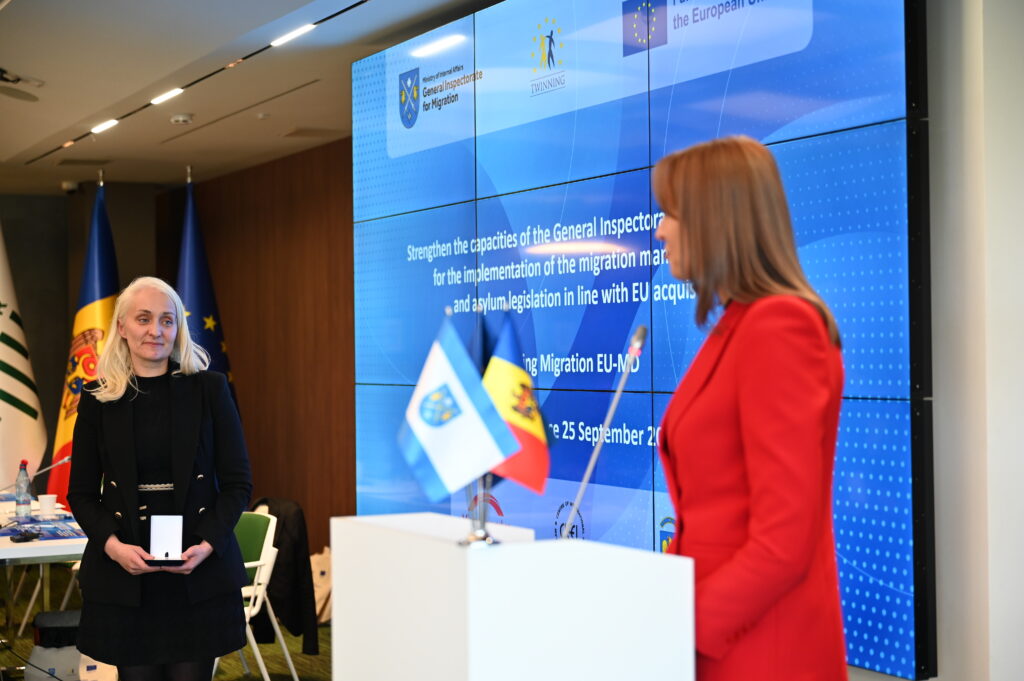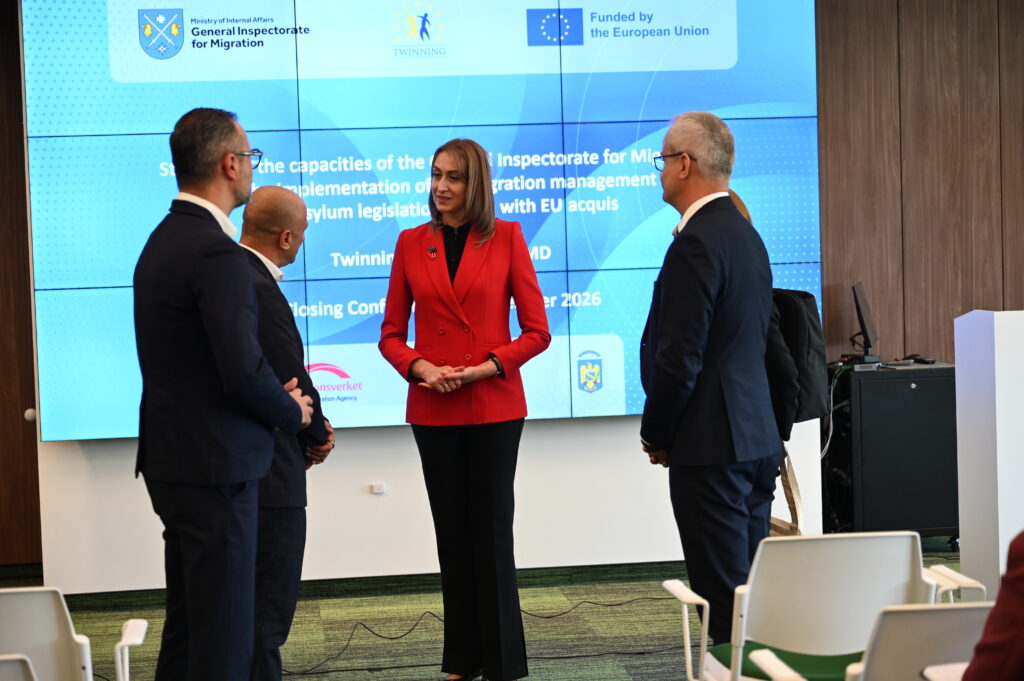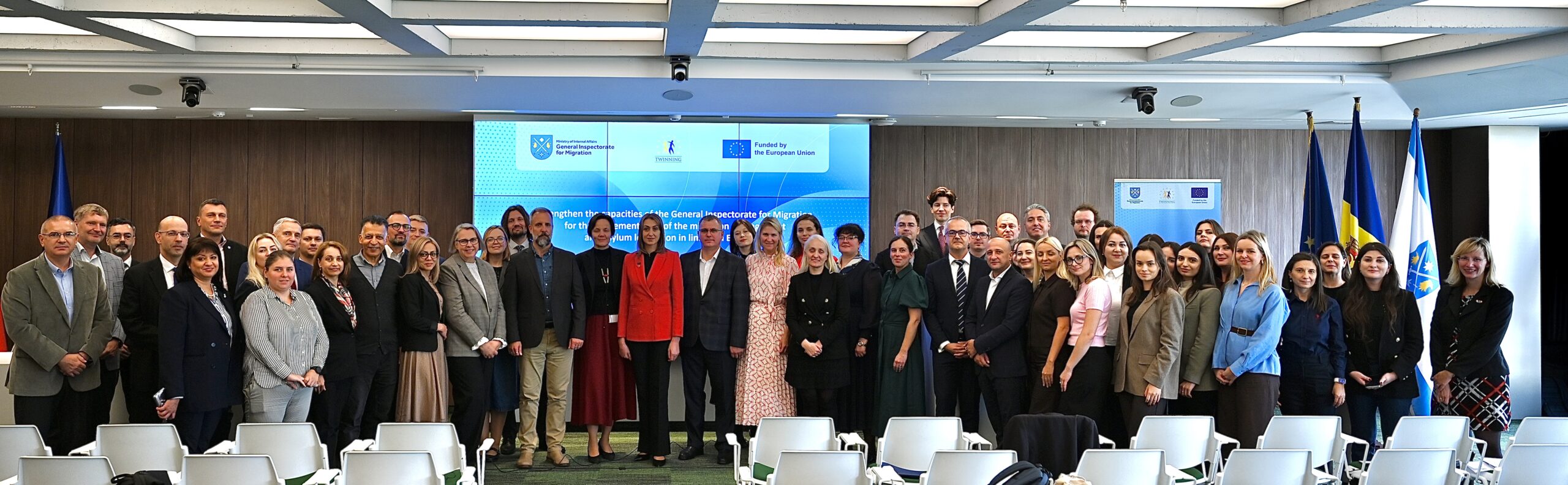
Enhanced professional capacities, updated procedures and the exchange of experience with institutions in EU Member States are among the key results of the project ‘Strengthening the capacities of the General Inspectorate for Migration to implement legislation on migration and asylum management in line with the EU acquis’, implemented from April 2025 to September 2026.
As part of the project, 11 assessments and analyses, 19 workshops, 3 training activities and 8 study visits to partner countries were carried out. In addition, 25 Standard Operating Procedures were developed or revised, providing a clearer framework for processes within the General Inspectorate for Migration.
European expertise was brought in across a wide range of areas, including asylum, temporary protection, legal migration and the residence of foreign nationals, family reunification, the integration of foreign nationals, and the management of cases involving vulnerable persons and unaccompanied minors. The project also addressed crisis preparedness, the digitisation and interoperability of processes, personal data protection, and preparations for the implementation of the EU Pact on Migration and Asylum.
“A project should not be measured solely by what it delivers during its implementation period, but by what remains within the institution once it has ended. What remains are procedures, knowledge and tools. But, more importantly, what remains is the capacity of people to continue what they have started together with their European partners. Moldova is at an important stage in its European journey. Accession to the EU means not only harmonising legislation, but also strengthening the capacity of institutions to apply European standards in their day-to-day work. I would like to thank the EU Delegation for its support and trust, our partners from Sweden, Romania and Greece for the expertise they have provided, and my colleagues at the General Inspectorate for Migration for their hard work throughout the project”, said Diana Salcuțan, State Secretary at the Ministry of Internal Affairs, at the project’s closing conference.
“The Twinning project is a clear example of European solidarity in action, transforming shared commitments into tangible progress in the field of migration and asylum in Moldova, under Chapter 24. As the country advances on its path towards accession to the European Union, the results achieved through this joint effort provide a foundation for resilient institutions and sustainable cooperation”, said Frederik Coene, Head of Cooperation at the EU Delegation to Moldova.
For his part, Dumitru Lazăr, Head of the General Inspectorate for Migration, emphasised the value of direct exchanges of experience with counterpart institutions in EU Member States.
“The Twinning project has provided us not only with experience and knowledge, but, most importantly, with the opportunity to work and learn alongside experts from Romania, Greece and Sweden. This experience has enabled us to draw on European practices and adapt them to the realities and needs of our organisation”, said Dumitru Lazăr.
The project was funded by the European Union and implemented in partnership with the Swedish Migration Agency, as lead partner, the General Inspectorate for Immigration of the Romanian Ministry of Internal Affairs, the Centre for International and European Economic Law, and the Ministry of Migration and Asylum of the Hellenic Republic.