
Moldova is undergoing a period of strategic transformation, during which strengthening the state’s capacity to address social, economic, and security challenges has become essential to its European path. Migration, the movement of displaced persons, and the integration of foreigners are priority areas that directly affect the country’s internal stability, social cohesion, and sustainable development.
In this context, the authorities have developed two complementary national programs: the National Program on Migration and Asylum for 2026-2030 and the National Program on the Phased Integration of Foreigners, including Displaced Persons in the Republic of Moldova, for 2025-2027. Both programs form part of the Internal Affairs Development Strategy 2022-2030 and are closely aligned with the objectives of the National Accession Program 2025-2029, the National Development Strategy “European Moldova 2030”, the Rule of Law Roadmap and the recommendations of the European Commission.
These programs are not merely public policy documents – they represent firm commitments to building an efficient, fair, and modern migration management system that safeguards the rights of citizens and displaced persons, enhances national security, and transforms migration challenges into opportunities for economic, social, and cultural development.
National Program on Migration and Asylum (2026-2030)
The National Program on Migration and Asylum has been developed within the broader European and national strategic context, with the goal of establishing an effective, secure, and harmonized framework aligned with European Union and international standards. The document is closely connected to key strategic instruments, including the National Accession Program 2025-2029, the National Development Strategy “European Moldova 2030”, the Internal Affairs Development Strategy, the Rule of Law Roadmap, and the recommendations of the 2024 Enlargement Package. It also incorporates Moldova’s negotiating positions on Cluster I and the conclusions of the bilateral screening exercise with the European Commission.
The program introduces several major innovations. First, the alignment of national legislation with the EU acquis, in particular Chapter 24, Justice, Freedom, and Security, establishes a coherent and predictable framework for managing migration, asylum, and citizen security. In parallel, the digitization of services for foreigners enables faster access to information and procedures, reduces bureaucracy, and increases transparency.
Furthermore, strengthening inter-institutional cooperation between the Ministry of Internal Affairs (through the General Inspectorate for Migration), territorial authorities, and international partners, such as the EUAA and Frontex, ensures a coordinated and effective response to migration flows and crisis situations.
Objectives and measures
The program focuses on three key areas designed to ensure modern, efficient, and humane management of migration.
1. Managing migration flows and preventing irregular migration
This priority area aims to establish an integrated system for monitoring, identifying and returning foreigners residing illegally, in full compliance with international standards. At the same time, diplomatic efforts will be intensified to negotiate and implement readmission agreements with third countries and to strengthen repatriation mechanisms.
Public Information campaigns will also be conducted to prevent irregular migration and combat human trafficking, promoting a culture of responsibility, awareness and respect for the law.
2. Digitization and modernization of public services
As part of the digital transformation of public administration, the integrated information system “Migration” will be implemented to connect relevant institutions and facilitate efficient data exchange. The modernization of the infrastructure of the General Inspectorate for Migration – from multifunctional centres to offices and equipment – will improve working conditions and enhance interactions with citizens. At the same time, continuous professional development of staff will strengthen statistical analysis and migration profiling capacities, supporting more effective planning and strategic decision-making.
3. Effective and fair asylum system
A key priority is the establishment of an asylum system grounded in clear, efficient, and equitable procedures applied consistently across the country. Reception conditions for applicants will be improved, with particular attention to protecting vulnerable groups and upholding human dignity. At the same time, cooperation with international organizations and civil society will be strengthened to ensure sustained support for displaced persons and facilitate their smooth integration into local communities.
The impact of this program is multidimensional: more efficient institutions, legislation aligned with EU standards, decentralized and digitized public services, reduced irregular migration, and a more resilient asylum system. Ultimately, the program seeks to transform migration challenges into opportunities for economic, social, and cultural development, balancing security with the protection of fundamental rights.
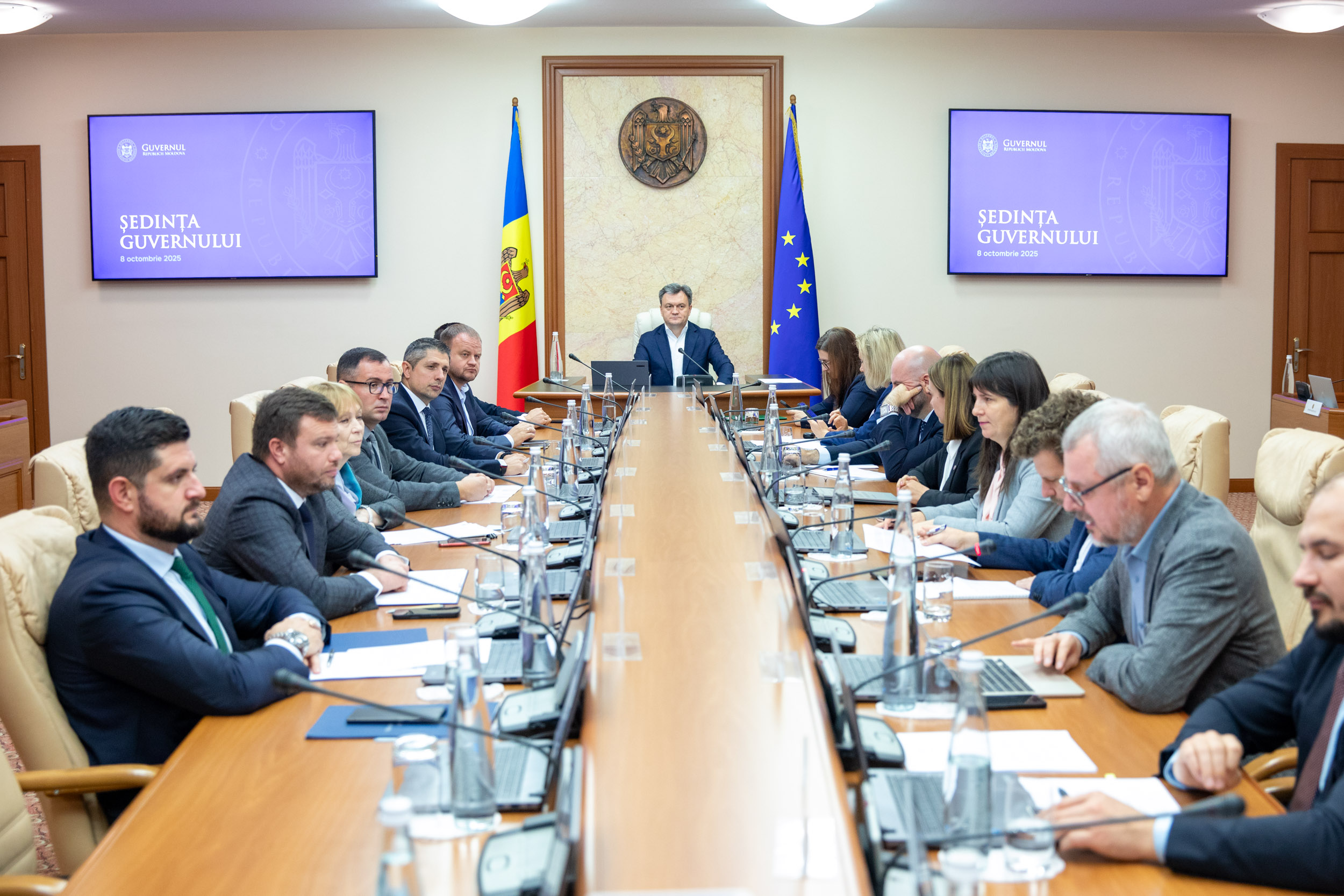
On October 8, the program was approved during a government meeting. It was developed by experts from the Ministry of Internal Affairs, the General Inspectorate for Migration, the Ministry of Labor and Social Protection, the Ministry of Foreign Affairs, the Ministry of Finance, the Ministry of Education and Research, the Ministry of Health, the Ministry of Economic Development and Digitalization, the Information and Security Service, the Congress of Local Authorities of Moldova, the Agency for Interethnic Relations, and the Office of the Ombudsman. The program was designed in line with the citizens’ needs and European standards.
National Program on the Phased Integration of Foreigners, Including Displaced Persons in the Republic of Moldova (2025-2027)
Complementing the Migration and Asylum Program, this initiative focuses on the gradual and sustainable integration of foreigners and displaced persons into Moldovan society. Its multisectoral strategy covers education, health, employment, housing, culture, and social protection, ensuring the inclusion of vulnerable group, such as children, women, persons with disabilities, and refugees from Ukraine.
Objectives and measures
The program seeks to strengthen the framework that facilitates the integration of foreigners into Moldovan society through initiatives promoting educational, social, economic, and cultural inclusion.
1. Social and educational integration
This priority focuses on enhancing the participation of foreigners in the educational and social life of the country. By 2027, the integration rate of foreigners into the national education system is expected to increase by 10% through the implementation of specialized programs for learning Romanian language, academic mobility, and international exchanges. At the same time, support mechanisms for foreign students and teachers will be developed to ensure that adaptation and training take place in an inclusive environment grounded in mutual respect and collaboration.
2. Access to social and health services
An important priority is to ensure access to essential health services for at least 90% of foreigners with legal status in Moldova. To achieve this goal, the infrastructure and capacity of placement centres will be strengthened to provide adequate assistance to those in need. In addition, specific measures will be implemented to protect women, children, and individuals facing multiple vulnerabilities, ensuring a safe and dignified environment for every beneficiary.
3. Economic and cultural integration
This component aims to encourage foreigners to participate in the economic and cultural life of the country. Measures will be implemented to facilitate employment and business development, alongside cultural mediation services and educational activities designed to foster dialogue and mutual understanding. By promoting intercultural exchange and active involvement in host communities, Moldova is advancing a model of social cohesion rooted in diversity, respect, and solidarity.
The program’s impact will translate into reduced social exclusion, sustainable integration into the labour market, strengthened community cohesion, and overall sustainable development of the country. These initiatives ensure an inclusive, equitable, and supportive environment for foreigners who choose to contribute to Moldova’s social and economic life.
The program was approved by Government Decision No. 285/2025 and was developed by specialists from the Ministry of Internal Affairs, the General Inspectorate for Migration, Ministry of Internal Affairs, State Chancellery, Ministry of Finance, Ministry of Culture, Ministry of Foreign Affairs, Ministry of Justice, Ministry of Economic Development and Digitalization, Ministry of Education and Research, Ministry of Infrastructure and Regional Development, Ministry of Labor and Social Protection, Ministry of Health, National Agency for Employment, National Agency for the Prevention and Combating of Violence against Women and Domestic Violence, and the Congress of Local Authorities of Moldova.
Conclusion
These two programs form the strategic pillars of national policy on migration and integration, balancing security, the protection of fundamental rights, and sustainable development. They reflect Moldova’s commitment to building an efficient, modern, and European-standard system that transforms migration from a potential challenge into a societal resource. Through digitalisation, decentralisation, inclusive mechanisms and inter-institutional cooperation, the country is strengthening internal stability, fostering social cohesion and promoting the active participation of foreigners in community life, demonstrating the maturity and strategic vision of Moldova’s migration policy.
